 News
For two years, the middle stripe of Ghana's flag was white
Theodosia Okoh's 1957 design lost its gold stripe to the CPP's white in January 1964, the month of the one-party referendum. The gold was back by the end of February 1966, the month of the coup.
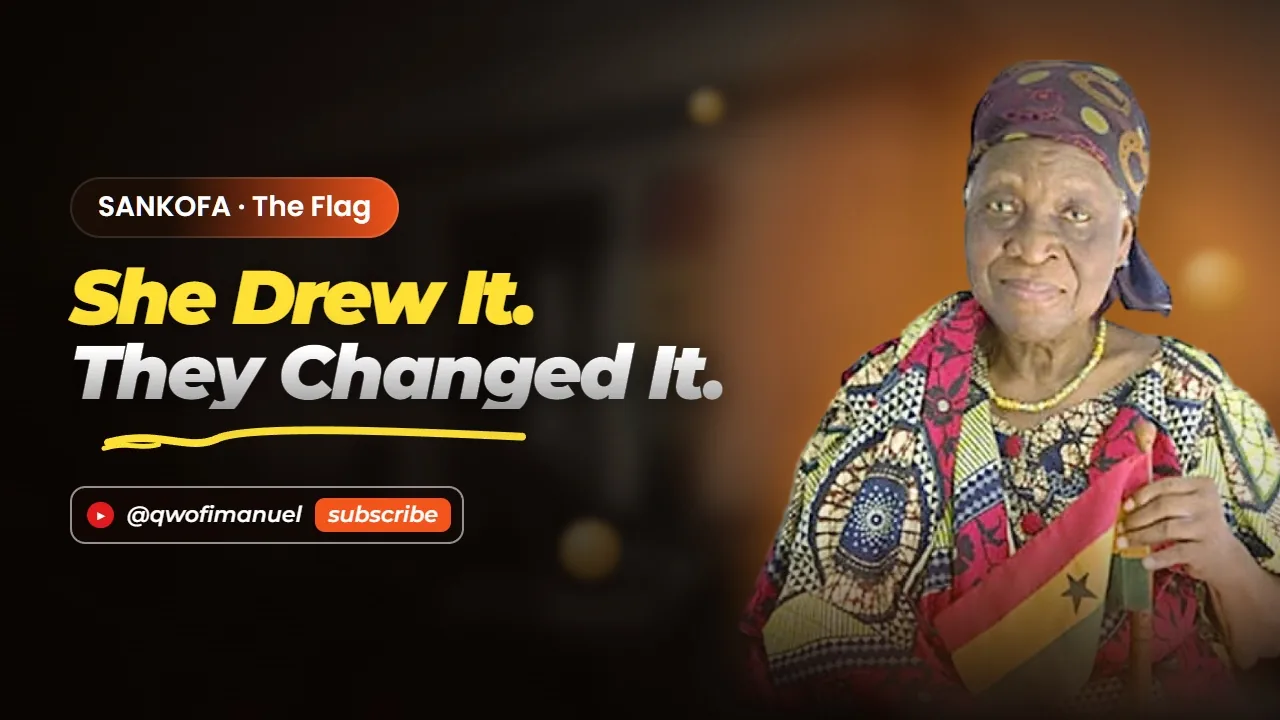
Ask most Ghanaians the colour of the middle stripe on the national flag and they will say gold. They are right, except for about two years in the 1960s, when it was white. The woman who designed the flag lived to see it change, and to see it change back.
1957: a competition
As independence approached in 1957, the government held an open competition for a flag. Kwame Nkrumah chose the design of Theodosia Okoh, a 34-year-old artist and teacher from Effiduase who had trained in fine art at Achimota.
She said she took her colours from the land. Red stood for those who died or worked for independence, and gold for the country's minerals. Green is usually explained as the forests and farms. The black star in the centre was, in her words, the symbol of African emancipation and unity. The flag was adopted on 6 March 1957.
The star's older story
In 1919, the Jamaican Marcus Garvey started the Black Star Line in New York, a shipping company meant to carry Black people back to Africa. The ships had problems, and the company was finished within about three years.
Nkrumah read Garvey as a student in America and later wrote that Garvey's book inspired him more than any other. John Mahama has written that the star was Nkrumah's homage to Garvey. Ghana went on to name its own shipping line the Black Star Line, and its football team the Black Stars.
1964: the white stripe
In January 1964, Ghana voted in a referendum to become a one-party state, with an official yes vote of 99.9%. The Convention People's Party's colours were red, white and green, and white replaced gold in the middle of the national flag.
In February 1966, with Nkrumah abroad, soldiers took power. By the end of that month the gold stripe was back.
Her flag, lowered for her
Theodosia Okoh went on to lead Ghana hockey for more than 20 years, and the national hockey stadium carries her name. She died in April 2015, aged 92. The government ordered flags across the country to fly at half-mast for three days in her honour.
Parties change colours and governments come and go. The flag went back to what she drew. Every 6th of March, the gold that goes up is hers.
- Wikipedia: Flag of Ghana
- Wikipedia: Theodosia Okoh
- People's Graphic Design Archive: Flag of Ghana, the open competition and her words
- BBC World Service: Theodosia Okoh, designer of Ghana's flag
- FOTW: Ghana's 1964 to 1966 flag
- Ghana Remembers: Ghana's flag history
- Wikipedia: 1964 Ghanaian constitutional referendum
- Wikipedia: Black Star Line
- Graphic Online: John Mahama, How we shine
- Hakai Magazine: origins of Ghana's Black Star Line
- Graphic Online: flags at half-mast for Theodosia Okoh (Apr 2015)
- GhanaWeb: Theodosia Okoh (21 Apr 2015)
- Graphic Sports: Theodosia Okoh goes home
Every factual line in this story is checked against at least two independent sources, unless the text says it comes from one report.